Local journalism is an important pillar of our democracy that leads the charge of keeping people informed, holding those in power accountable and provides a voice for citizens and the events they face around the world. Despite the evolving nature of journalism and the roles journalists now take on, the act of reporting and presenting to the people has become as vital as ever. However, it’s the unique character of each individual journalist and their ability to make human connections to provide information that makes the work they do so important to a properly functioning society.
Local journalists undertake crucial roles that larger news organizations can’t. Where larger news organizations cover national news and stories that affect people on a much larger scale, local journalists cover occurrences that they know are important to their communities. They allow local members of their communities to be better informed about things that are happening within their communities, and acknowledge the aspects that are important to them.
Gaps in news coverage can be extremely damaging to a community. It allows corruption to bleed through these cracks and become unaccounted for which then allows communities to become underrepresented or incorrectly represented.
Aisha Wallace-Palomares is one of these journalists who has demonstrated the act of sharing necessary information with the public but in a human and personable way that makes journalism important. This San Diego native journalist currently works for L.A. Taco news but has been continuously reporting using her own Instagram account as her publishing outlet, it’s on there that she became recognized by KQED for covering a breaking ICE story taking place in her own hometown community.
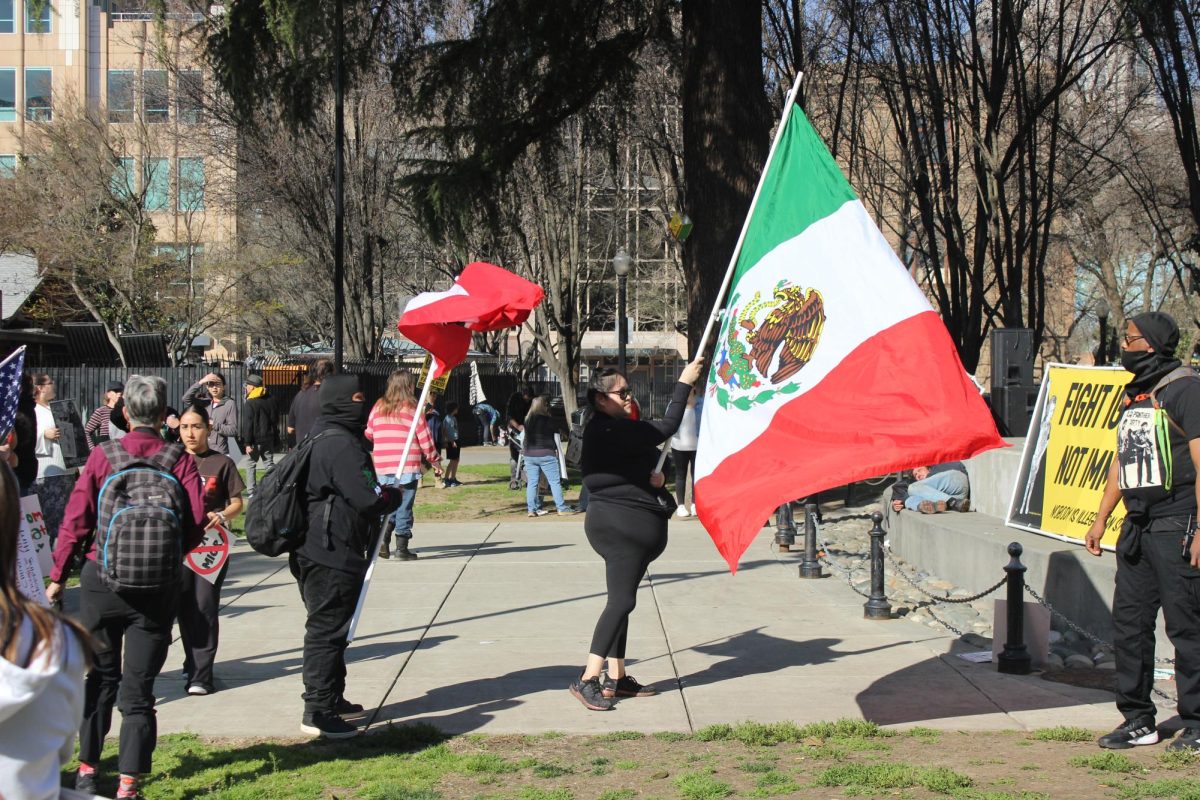
The story followed 17-year old Kevin Robles, who was driving in his friend’s car through their neighborhood in San Diego County when they witnessed masked men taking someone out of their vehicle. Robles then went to the aid of this man by having his friend pull over so he could livestream the event on his Instagram, which led to the video going viral with more than 70,000 views. However, about a week later, Immigrations and Customs Enforcement and other federal agents showed up at the Robles family door with warrants for both of his parents who were then taken into ICE custody, with Kevin and his 14-year old sister being handcuffed despite being U.S. citizens. Robles describes the experience of being woken up to agents banging on their doors and windows until flash grenades were launched into their living room and hallway. And when he did emerge from his bedroom door he states that he was faced with 10 to 15 agents pointing rifles at his face.
Wallace-Palomares was one of the first journalists to interview Robles and share his story on her Instagram to spread awareness of the local ICE raids. For Robles’ story she was able to verify the status and reasoning for his parents’ arrest as well as speak to an ICE spokesperson about the nature of the event. Even though reporting can only go so far in gaining a sense of justice for events like these, she was still able to collect the proper information and relay this to surrounding community members who rely on the information to go about their daily lives.
Wallace-Palomares also advocates on the importance of accessible news especially to the communities affected. In this case, it means bilingual and culturally relevant news stories. She shares this sentiment in an interview with the Current based on her experiences in her own hometown and community.
“I don’t believe that the current existing news outlet can accurately or empathetically cover the Latino community and cover a lot of these stories that are happening, and there isn’t really a local news source that is accessible,” Wallace-Palomares said. “We have a lot of people that only speak Spanish in my community, and there is not a lot of local news out there that focuses on local news that is accessible in Spanish.”
She also stresses the importance of educating different communities including the immigrant communities on how to speak to journalists in terms of their rights. She believes that by letting people become familiar with the practice and teaching them terms like “on or off record”, she can effectively make people feel safe when speaking to reporters and help them share their own stories.
The insight that local journalists are able to provide on stories affecting the communities they grew up in, is one that can be vital to the authenticity of the story. Wallace-Palomares emphasizes the value that these perspectives can not only have on the story but the audience receiving it.
“I really do think that it’s one of the most valuable things to have community ties and to report on those communities because when you parachute in you don’t really know the history of the community,” Wallace-Palomares said.
Journalists are taught to collect information and report without bias—but also to remember the importance of being humane in connecting with sources and their stories. In this case her use of her knowledge about her community helped her alter the way she reports, as well as speak out for those in her community who were silenced and couldn’t speak up for themselves.
On a larger scale, local journalists are sometimes the only people that can cover events that are happening in their area. Corruption and injustice depend on the people staying uninformed about the issues that affect them.
Since the beginning of the current ongoing conflict between Israel and Palestine at least 222 Palestinian journalists and media workers in Gaza have been killed, according to the International Federation of Journalists. The IFJ has gathered enough evidence to claim that the Israeli army has been targeting journalists in the war in order to restrict the media coverage of the atrocities occurring in Gaza.
International journalists and foreign media have been banned from entering Gaza since the start of the war in 2023. That means that since 2023, the only people who have been reporting on, videoing and spreading images of the bombing, starvation and lack of aid in Gaza have been Palestinian journalists. This makes the targeted killings of Palestinian journalists especially heinous because it shows that the IDF and the Israeli government are purposefully trying to control the media around the Israel Palestine conflict.
“This is perhaps the hardest thing I’m reporting about the past 22 months. I’m not far from al-Shifa hospital, just one block away and I could hear the massive explosion that took place in the past half hour or so near al-Shifa hospital,” Hani Mahmoud, a Palestinian journalist, said. “I could see it when it lit up the sky and, within moments, the news circulated that it was the journalist camp at the main gate of the al-Shifa hospital.”
These specific, targeted strikes of Palestinian journalists and media tents are an unjust attempt to silence the only journalists that are able to report on the issues that affect them locally and in turn create gaps in the events being reported on in Gaza. This allows people to stay uninformed and unaware of the atrocities occurring.
Protecting journalists and their rights to report on these conflicts that directly affect them leads to more empathetic and truthful coverage of news occurring all around the world. Restricting journalistic voices by targeting journalists and reducing the impact of their voices dilutes the public service that journalism is supposed to provide.
To not only live in the areas affected, but to experience the events firsthand is a unique outlook in itself. Those who are able to both live and report thorough social injustice events, are not only doing their service in providing accurate information but also better reflect the experiences and needs of those communities amid such events. The perspective of local journalists is crucial to the diversity and genuine nature of reporting in journalism.