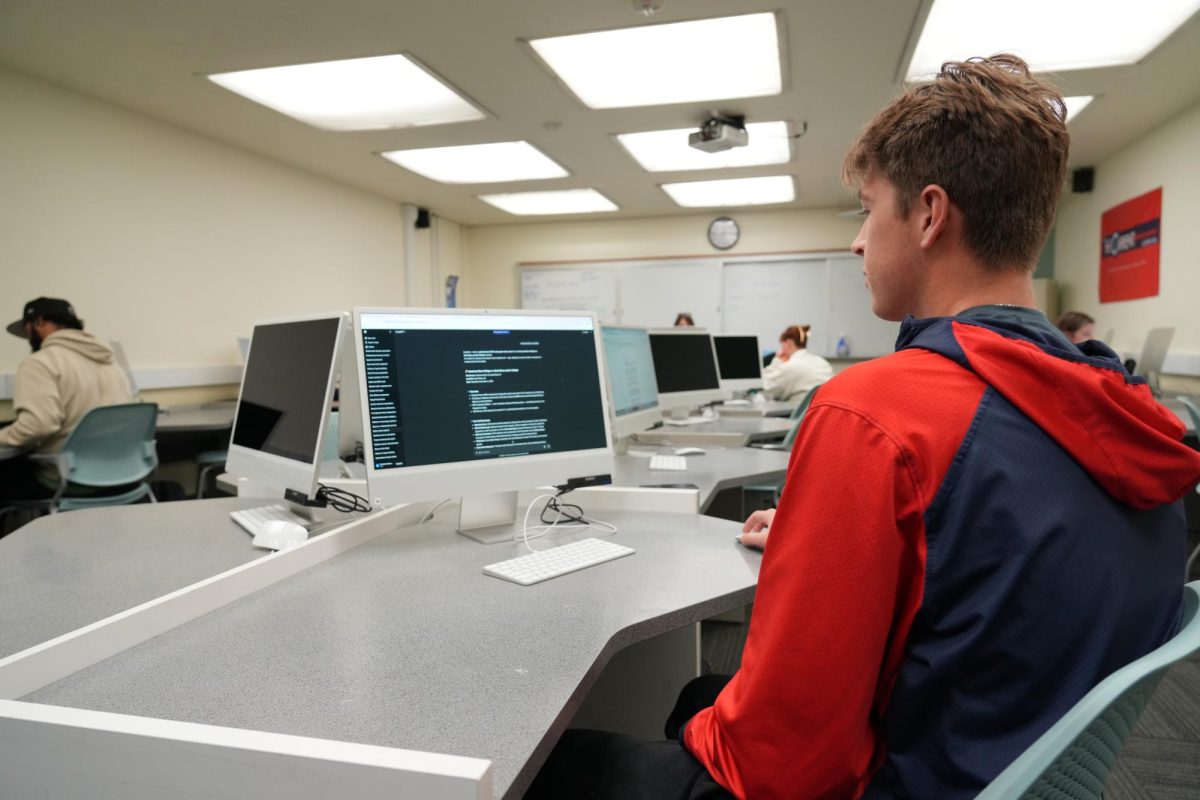
For centuries, learning has been a human-to-human interaction. However, in more recent times, humans have begun teaching machines. And now, we’re letting them teach us back. Using the internet to help with classwork isn’t new; first it was Google, then Grammarly. But with artificial intelligence, it feels like we’ve entered a whole new league.
Just as calculators changed the math landscape and how Google changed the research landscape, AI will also be a tool for brainstorming, writing and problem-solving. Instead of fearing AI, educators and students should embrace the future and learn about usage of AI responsibly and creatively.
Some argue that AI has gone too far in classrooms, but the truth is that it isn’t replacing education; it’s redefining it. AI isn’t a threat to learning; it’s the next step in how students adapt to a changing world.
At American River College, like college campuses everywhere, students are learning to navigate this new era of technology. Critics claim AI makes people lazy or less original, but that view misses the bigger picture. AI isn’t here to replace human thought, but to expand it.
As a college student myself, I have used AI on hundreds of occasions. Have I used it irresponsibly? Sure. There have been times when I let it do more of the thinking than I should have, like using it to draft entire discussion posts or quickly generate answers when I was stressed or short on time. In those moments, I wasn’t learning anything; I was just trying to get the assignment out of the way.
But before AI, would people not cheat? Of course they did. AI makes some assignments feel less serious because it can instantly complete tasks that were created for a pre-AI classroom. Before AI, there was Google and before Google, there were good ol’ fashioned copied notes and whispered answers in class. The difference now is that AI makes those shortcuts smarter, faster and harder to detect, which means instead of banning it, we need to teach students how to use it the right way.
In a recent, informal survey of 20 people leaving the American River Cafe on campus, 14 students admitted to using AI on an assignment this semester, and five of those 14 said they had used it on an entire assignment, while the others said they relied on it only for grammar, polishing or idea generation.
AI does have drawbacks when used irresponsibly, but ultimately, that falls on those who choose to use it in that way, they are only harming their own learning. On the other side of things, AI is able to provide near instant feedback and review work as you are doing it, it is able to provide suggestions, and even show you what you are doing wrong.
Some educators need to stop pretending that AI isn’t a viable tool to learn from. In a study conducted by The Harvard Graduate School of Education, the researchers concluded that many who participated “highlighted positive academic experiences they’ve had with generative AI,” even calling it the “modern approach to learning.”
Ultimately, AI is neither a shortcut nor a threat; it’s a tool. Like any tool in education, its impact depends on how we choose to use it. Embracing AI responsibly might not only improve learning outcomes but also better prepare students for the future in technology.