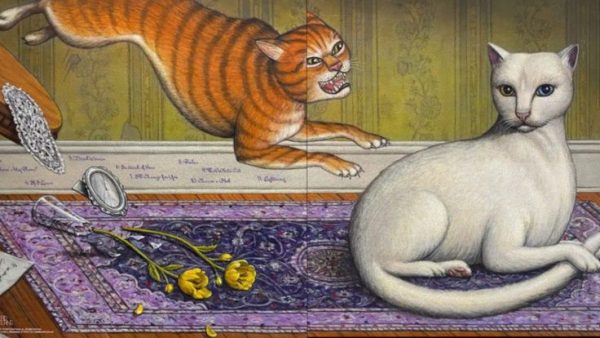
Since the release of her first album “Lush” in 2012, Mitski has maintained a moody sound that vividly combines rock, pop and folk music. Over time, she has perfected these genres, while expanding on orchestral, distorted and surreal elements, offering a broad yet defined range of music. Mitski’s lyricism further solidifies her raw and poetic nature, oftentimes theatrically exploring themes of anxiety, depression, heartbreak, adulthood and inadequacy.
Through every release, Mitski gives listeners an evocative experience, seamlessly blending her music with harmonious visuals. Her newest album, “Nothing’s About to Happen to Me” released on Feb. 27. offers nothing less and represents everything that makes her and her artistry so distinct. By integrating topics mentioned in previous albums, like anticipatory grief, self-loathing, femininity and more, “Nothing’s About to Happen to Me” elevates Mitski’s discography to be more of a complete story.
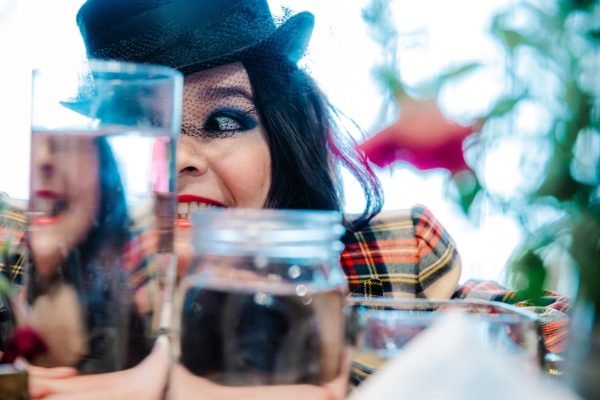
“The Lake” opens the album, and expresses the desire to leave the past behind and start new elsewhere, abandoning mistakes and relationships that could never be escaped otherwise. Mitski emphasizes how living in a small town where everyone knows each other can make someone feel trapped in who they used to be, as their story has already been written for them.
As the song continues, Mitski begins romanticizing the possibilities of a big city by comparing it to the sky, while her past is a dark lake. She sings of backstroking in the water forever, creating the visual that she’s floating between two options, while going back and forth from sorrow in the verses to dreaming in the choruses.
This concept is not new for Mitski, but “The Lake” feels like it comes from a more developed perspective compared to past songs. In “Lush,” the album she released at 21, Mitski sang of a similar situation in “Brand New City,” an alternative rock song that embodies the feeling of breaking down and desperately wanting to find a way out. It’s quick, jolty and feels like teenage angst, while “The Lake” is solitude and looking back on things as an adult.
The next song, “Where’s My Phone” was released on Jan. 16 as a lead single for “Nothing’s About to Happen to Me,” and was accompanied by a music video that represented the album’s aesthetic. Filmed in a 19th-century New England house, the music video is full of action and uncomfortable angles making it feel like an anxiety attack.
In an interview with Lana Thorn, author for Phantasmag magazine, director Noel Paul said the inspiration for the music video was the first chapter of Shirley Jackson’s short novel, “We Have Always Lived in the Castle.” While they explored similar gothic themes present in the novel, Paul made it clear Mitski was not trying to recreate the story, but rather use it as reference.
“This idea of a reclusive, paranoid cat lady living alone in a home that is full of generations’ worth of ‘inherited trauma,’’ Paul said. “I believe that’s central to her whole album campaign.”
“Where’s My Phone” keeps up with the music video by encapsulating the same hectic energy and reckless urgency. While the song maintains structure for the most part, the bridge introduces distortion and repetitive lyrics that enhance the feeling of a tense environment. The distortion is further amplified in the outro, as Mitski repeats “Where’s my phone?” in an almost unintelligible way. Additionally, the verse “I just want my mind to be a clear glass / Clear glass with nothing in my head” stresses Mitski’s desire to stop feeling frazzled and restless, strengthening the storyline of feeling trapped.
On ALT CTRL Radio with Hanuman Welch, an Apple Music podcast, Mitski said the song was influenced by her tendency to disassociate to cope with feeling constantly overwhelmed and anxious. While writing the song, she thought about all the ways she makes her brain “as empty as possible,” which is typically through her phone.
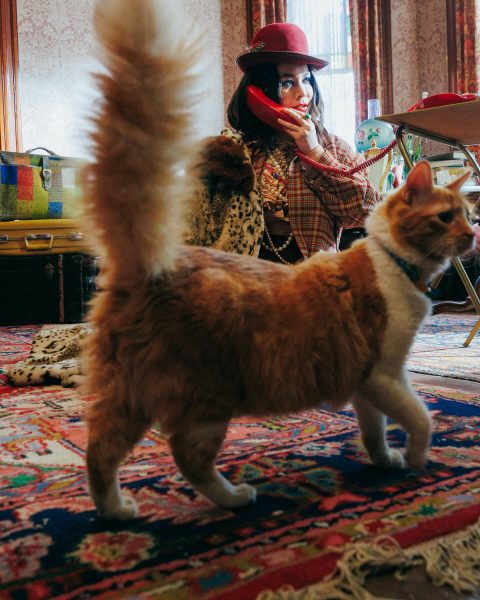
The next song, “Cats” sounds dreamy and soft in comparison to “The Lake” and “Where’s My Phone,” and follows a narrative of heartbreak and understanding. Mitski sings of not wanting to leave someone she loves, while letting them choose if they want to go because she feels both accepting and defeated.
Through it all, Mitski looks to her cats for support. To no surprise, the song was influenced by her two house cats she adopted from the Nashville Humane Association. The song brings a somewhat lighthearted element to the album that alleviates the stress of the opening tracks.
The fourth song, “If I Leave,” returns to Mitski’s “Puberty 2” and “Be the Cowboy” roots, while also tapping into similar lyricism as “This Land is Inhospitable and So Are We,” her last album.
“If I Leave” immediately sounds like impending doom with the haunting drumming that is reminiscent of“I Bet on Losing Dogs,” while bringing out the same emotion as “Geyser.” On these tracks, Mitski feels like nobody will ever love her the way her current partner does, despite knowing she isn’t happy in the relationship.
In the next song, “Dead Women,” Mitski sings about the societal expectations of women and how they are not always seen as “full, thinking humans.”
The song gives listeners a break from the rock undertones, as it sounds like it’s straight off of “This Land is Inhospitable and So Are We.” Relying more on string instruments and synthesizer sounds, the song succeeds in telling a moving story about the objectification that women experience.
The idea of someone’s story being told for them, or someone being misunderstood because of preconceived notions, ties back into “The Lake,” making the album more complete conceptually. Furthermore, its composed essence makes it a good transition into the next song, “Instead of Here.”
In “Instead of Here,” Mitski sings about ignoring knocks on her door while she lays on the floor with death crouching beside her. Like “Where’s My Phone,” the song relates back to ideas of dissociation, but it comes off more tame, and seems to focus more on depression and being comforted with the familiarity of being sad.
The song also seemingly has some hints of suicidal thoughts, as Mitski says she called death, who’s referred to as “she,” unknowingly.
“She said she wished I’d known / That I’m still just a kid / But knew I would call again / So she’d mosey on back / In case next time’s really the end.”
While “Dead Women” and “Instead of Here” aren’t stand out tracks on the album, they still contribute to the aesthetic and story, while being good for listeners who want to create some narratives on their own.

“I’ll Change For You,” which was released on Feb. 3 as the second single, is about drunk calling an ex and begging them to take her back. Mitski referred to the song as being “pathetic” and “literal.”
In the song, Mitski paints the scene of being at a bar by adding background noise of the tapping of glasses, laughter and conversation. The lyrics make it clear that, while she is in a crowded space, she still feels lonely and wants someone she doesn’t have. Once the bar closes, she waits outside “like a kid waiting for a ride” and watches the cars pass by.
“I’ll Change For You” felt necessary to this album. It represents the slowness in contrast to “Where’s My Phone” and also immediately feels like staple Mitski. The story of being at a bar surrounded by people and still thinking of someone else draws an immediate connection to her “Be The Cowboy” song, “Nobody,” where she says she “opens the window to hear sounds of people.”
Yet, while being thematically similar to her other music, the jazzy elements play into the older visuals of “Nothing’s About to Happen to Me,” and is a consoling and tender song to come after mellow tracks. It feels like authentic Mitski.
Mitski keeps the “playfullness” going with the next song, “Rules,” a song that picks up the pace and brings in dramatic trumpets and upbeat drumming. In the song, Mitski goes over every step she will take while being with a lover makes her feel awful.
Like “Instead of Here,” “Rules” touches on Mitski being comforted by her own sadness, saying, “I’ll be alone for a while / But I’m only crying ‘cause it feels good.” It almost feels like a “happier” rendition of “Lonesome Love,” a song off “Be The Cowboy” where she sings about meeting up with someone she knows is bad for her with plans of shutting them down, but she ends up going with them anyway.
While “Rules” is a good addition to “Nothing’s About to Happen to Me,” it competes a bit too much with “Lonesome Love.” The somewhat comedic effect of “Lonesome Love” with its lyricism and instrumental is better than “Rules,” and seems more finished. But there’s nothing wrong with a fun song, and tracks like this are necessary to be able to make it through the album. If it wasn’t competing with the rest of her discography, it would have been more effective.
“That White Cat” and “Charon’s Obol’’ were perfect songs leading up to the finale of “Nothing’s About to Happen to Me” because they both expand on the story of the album, and Mitski’s discography.
In “This Land is Inhospitable and So Are We,” Mitski sings about wondering what’s truly hers in “My Love Mine All Mine.” She explores the idea of materialistic things not belonging to her since they aren’t permanent and will eventually be destroyed. Despite this, she wants her love to be forever. In “That White Cat,” Mitski has a more indie rock take on a similar idea, after she was inspired by a cat peeing on her house.
“I got a very existential, ‘Oh, so this house that I work for, and pay for and try to keep up and take care of, in an instant, can just be owned by another cat according to other cats?’” Mitski said in an interview with Dazed magazine.
“That White Cat” also dives into the idea of working hard for the benefit of things that feed off of you, like the new feline owner of the house and wasps who live on the roof.
The final song, “Lightning,” jumps back to the concepts in “That White Cat” exploring death once more, but through a different lens. Instead of being about belongings, it’s more about processing death overall.
Along with “If I Leave” and “I’ll Change for You,” “Lightning” is one of the best songs off the album. Combining slow and fast elements, strong drums and electric guitar, Mitski puts every strong aspect of “Nothing’s About to Happen to Me” into one song. It’s dynamic, and the intense bridge sounds homey to any Mitski fan. It also stays true to Mitski’s tendency to question the world around her.
While “Nothing’s About to Happen to Me” isn’t the best album off Mitski’s discography, its addition solidifies her creative and artistic ability to create theatrical pieces of work. Her visual and lyrical storytelling mixed with the unique production and instrumentals never fails to transport listeners to her world.
While Mitski definitely isn’t retired from sad, she still manages to make her albums immersive and on-brand, making her sentimental takes on life timeless.