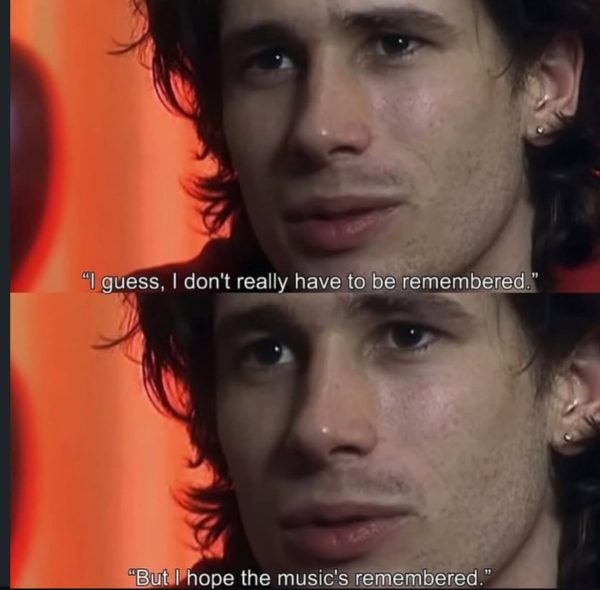
“Just the music…because when I’m dead, that’s the only thing that’ll be around.”
These words were shared by musician Jeff Buckley when asked in an interview how he’d like his fans to think of him, and the first quote revealed in the “It’s Never Over, Jeff Buckley” documentary trailer as audiences are immersed into a never-before-seen perspective of Buckley’s legacy.
Fans are offered the experience to grow beside the life and career of musician Jeff Buckley in the new documentary by Amy Berg. Its title references one of Buckley’s arguably best songs, “Lover, You Should’ve Come Over,” with the line “It’s Never Over” to reflect his ongoing beloved legacy. The sensitivity and emotional intelligence that Jeff portrayed in his work, especially on his highly praised album “Grace,” have intoxicated fans for many generations. Devoted Buckley admirers can now experience 106 minutes of never-before-seen footage, voice messages and interviews with his beloved mother, friends and past partners all to create an intimate and authentic perspective of Buckley’s life up until the point of his untimely death in 1997.
The documentary was provided a limited theatrical release on Aug. 8, which succeeded in earning $400,000 in its opening weekend. Following an announcement released by the “It’s Never Over, Jeff Buckley” movie Instagram account on Nov, 17 in celebration of Buckley’s birthday, the documentary will soon be accessible to stream on HBO Max starting Dec. 4. This post was shared by both the official movie account and Berg’s own account where they reference a popular video of Buckley inviting audiences to “come into his world.”
The story starts by portraying young Buckley in his childhood and the aspects that influenced his relationship with music. He was raised solely by his mother, Mary Guibert, in the absence of his father, Tim Buckley, who left his family in pursuit of a music career. Berg delicately walks through the impact of Buckley’s rocky relationship with his father’s absence and seeing him publicly choose his music career, as well as the effect that his childhood mindset had on his ability to handle fame and the creation process later on in his life.
Fans are then transported to his early days performing live in a Lower East Side coffee shop named Sin-é Café singing both covers and original songs. Berg portrays the comfort of that environment for Buckley as the atmosphere provided a carefree artistic space for him to experiment within. This created the basis for one of his most popular EPs, “Jeff Buckley Live at Sin-é,” with Berg’s inside look into the environment of this venue, providing even more depth to the listening experience of these recorded performances.
The musical mindset of Buckley was revealed as she portrayed his writing process as well as the heavy influence of his artistic heroes, including Nusrat Fateh Ali Khan, Nina Simone and Led Zeppelin. Most importantly, this story joins Buckley as he experiences the myriad of emotions that come with the rise of fame, and how the experience took a toll on him when going back into the creation process.
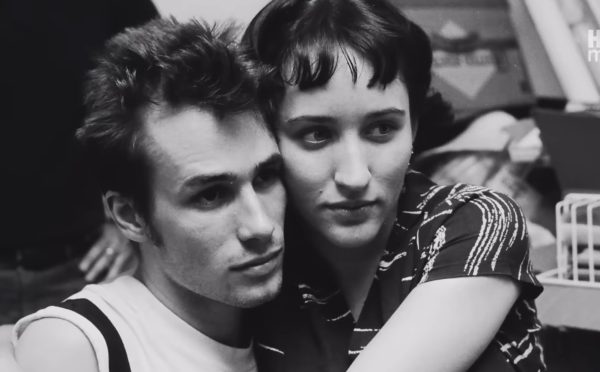
Buckley’s most emotionally impactful relationships were revealed throughout this movie through interviews, letters and pictures with past partners such as Rebecca Moore, who was rumored to inspire many of the songs on Buckley’s ‘Grace.’ Interviews with Buckley’s mother took audiences through his life up until the last voice message he sent her before his untimely death, creating an intensely emotional, intimate moment that audiences can’t help but shed a tear for. This incorporation provided a profound and vulnerable view into his life and the personal relationships that impacted it. Through the recollections of those closest to him, audiences are also exposed to Buckley’s sole devotion to music over his own fame as well as how fleeting it all felt to him from the beginning.
The morbid mystique of his death, with his life ending in a poetically tragic way similar to the tone of the music he created, left fans stunned by an ending we all knew was coming. Buckley’s life unexpectedly ended when he went for a spontaneous swim in Wolf River in Memphis, where his bandmate testified he walked down to the river singing Led Zeppelin and disappeared in the water before he was later found drowned by a passing boat wake. Getting an inside view of his work and his perspective surrounding his career towards the end of his life bleeds a bittersweet feeling into the audience as they know the impressionistic reach that Buckley’s music had on fans in a way that he never truly experienced.
Berg provides a feminine perspective that is evident through the tender but unfiltered truth of Buckley’s life and personality, which creates respectful softness that is essential to portray a person who valued those perspectives in life. With the addition of an artistic aesthetic that almost scrapbooks his life in a way that feels like both old home-recorded film and a love letter to a dear friend.
This conveyed heart-felt vibe was due to Berg’s own personal experience as a fan, dating all the way back to her first listen of his album ‘Grace’, which was shared in an interview with The Big Takeover.
“It’s difficult to imagine a time when I wasn’t attempting to make the Jeff Buckley doc,” Amy said. “It’s been on my bucket list since I made my first film…and maybe since I first heard ‘Grace’ in 1994, which literally became the tear that hangs inside my soul forever.”
She not only pulled back the curtain into Buckley’s personal life but did so with a graceful admiration that shares his interests, viewpoints and adorations about music and life all in an effort to add depth to the musical and personal connections many fans feel with the artist, and create a labor of love to Buckley as a fan herself.